sbet casino The House Edge Explained
Understanding The House Edge at sbet casino: A Beginner's Guide
Welcome to the exciting world of online gambling, where entertainment meets the thrill of potential winnings! For newcomers, understanding the fundamental concepts is key to a more enjoyable and informed experience. One of the most crucial concepts you'll encounter, especially when playing at sbet casino, is the 'house edge.' This isn't just a fancy term; it's the mathematical advantage that the casino holds over players in any given game. Grasping what the house edge is, how it works, and its implications can significantly influence your gaming strategy and expectations. This beginner's guide will demystify the house edge, offering insights that will help you navigate the diverse offerings, from classic casino games to live dealer experiences, available on the sbet casino mobile template.
As you delve into the vibrant Philippines market of online gambling, armed with knowledge about the house edge, you'll be better equipped to make smart decisions, manage your bankroll effectively, and truly appreciate the entertainment value of each game. We'll cover everything from what it means to how it's calculated, and how you can use this understanding to your advantage, especially when exploring the wide array of games from providers like JDB Gaming, JILI Games, and Play’n GO, accessible through convenient payment options such as Maya and GCash.
Table of Contents
- What Exactly Is the House Edge?
- How Does the House Edge Work?
- Understanding House Edge Calculation
- The Impact of House Edge on Players
- Games with the Lowest and Highest House Edge
- Strategies to Mitigate the House Edge
What Exactly Is the House Edge?
The house edge, often expressed as a percentage, represents the casino's built-in advantage over the player in any given game. It's the expected percentage of a player's initial wager that the casino will retain over the long run. For example, if a game has a 2% house edge, it means that, statistically, for every ₱100 you bet, the casino expects to keep ₱2 over an extended period. It's crucial to understand that this is a long-term average, not a guarantee for every single session. In the short term, anything can happen – you could win big, or you could lose quickly. However, the more you play, the closer your results are likely to align with the theoretical house edge.
This edge is how casinos, including sbet casino, ensure their profitability and operational costs are covered. It's not about cheating; it's a fundamental aspect of the business model. Without a house edge, casinos wouldn't be sustainable. It's built into the rules and payouts of each game, ensuring that while players can win, the odds are always slightly in favor of the establishment. This concept applies universally across all forms of online gambling, whether you're spinning slots, hitting blackjack, or placing bets on sports.
How Does the House Edge Work?
The house edge works by slightly skewing the true odds of an event in the casino's favor. Let's take a simple example: a coin toss. If it were a fair game, you'd bet ₱10 on heads, and if it lands on heads, you win ₱10. The true odds are 1:1. However, if a casino offered this game and paid out only ₱9 for a ₱10 bet on heads, they would have a house edge. The difference between the true odds and the payout odds creates this advantage.
In more complex casino games, the house edge is embedded in various ways:
- Roulette: The presence of the '0' and '00' (in American Roulette) pockets. If there were only red and black, the odds would be 50/50. The green pockets give the house its edge.
- Blackjack: The dealer acting last and the rules regarding when the dealer must hit or stand. Also, the natural advantage of players busting before the dealer.
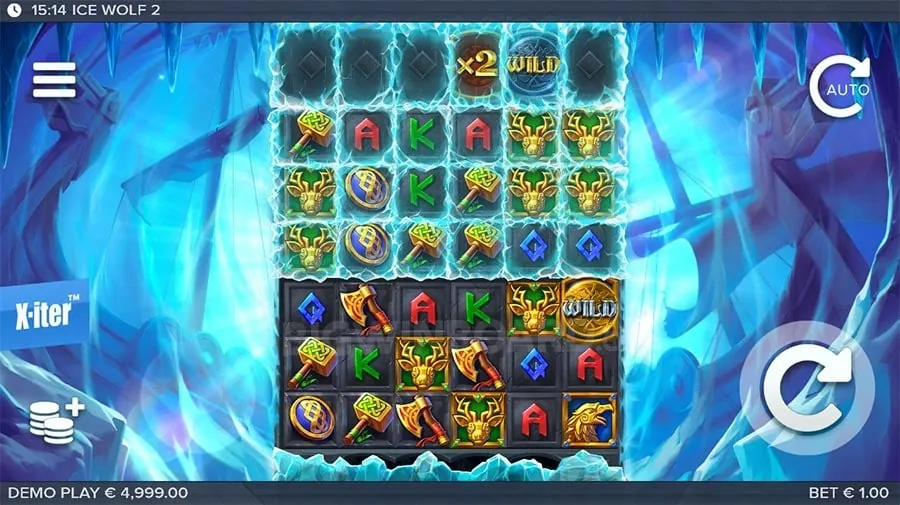
- Slot Machines: The Return to Player (RTP) percentage is the inverse of the house edge. An RTP of 96% means a 4% house edge. This is determined by the game's programming and random number generator (RNG).
Understanding these subtle differences in rules and payouts is key to recognizing where the house edge lies. It's not about manipulation; it's a transparent part of the game's design, ensuring the casino's long-term viability. When playing on the sbet casino mobile template, these principles apply to all games, from classic table games to the latest video slots provided by JDB Gaming and JILI Games.
Understanding House Edge Calculation
While players don't typically need to calculate the house edge themselves, understanding the basic principle behind it can be enlightening. The house edge is essentially the difference between the true odds of an event and the odds the casino pays out, expressed as a percentage of the player's wager.
The formula can be simplified as:
House Edge = (Expected Loss per Bet / Initial Bet) * 100%
Or, more generally:
House Edge = (True Odds - Payout Odds) / True Odds * 100%
Let's consider an example with a single zero roulette wheel. There are 37 pockets (1-36 plus 0). If you bet on a single number, the true odds of it hitting are 1 in 37. However, the casino typically pays out 35 to 1. So, if you bet ₱1 on a number:
- If you win (1 out of 37 times), you get ₱35 profit + your ₱1 back = ₱36.
- If you lose (36 out of 37 times), you lose ₱1.
Over 37 spins, theoretically, you'd win once (₱35 profit) and lose 36 times (₱36 loss). Your net loss would be ₱1. The total amount wagered would be ₱37. So, the house edge is (₱1 / ₱37) * 100% ≈ 2.70%. This calculation highlights how a seemingly small difference in payout can create a consistent advantage for the casino over time.
For slot machines, the house edge is usually derived from the Return to Player (RTP) percentage. If a slot game has an RTP of 96.5%, its house edge is 100% - 96.5% = 3.5%. This information is often available in the game's rules or information section at sbet casino, helping players make informed choices.
The Impact of House Edge on Players
The house edge has several significant impacts on players:
- Long-Term Expectation: It dictates that, over an infinite number of plays, the casino will always come out ahead. This doesn't mean you can't win in the short term, but it's a statistical certainty over time.
- Bankroll Management: Understanding the house edge is crucial for effective bankroll management. Games with a higher house edge will, on average, deplete your bankroll faster if you play for extended periods. Conversely, games with a lower house edge offer a better chance of prolonging your play and potentially achieving short-term wins.
- Game Choice: The house edge is a primary factor in choosing which games to play. Savvy players often gravitate towards games with lower house edges to maximize their chances.
- Strategy Development: In some games, like blackjack or video poker, applying optimal strategy can reduce the house edge significantly. Ignoring strategy can dramatically increase the house's advantage.
For players in the Philippines market, playing at sbet casino means being aware of these implications. It encourages a responsible approach to online gambling, focusing on entertainment rather than guaranteed profit. Remember, the goal is to have fun, and knowing the house edge helps set realistic expectations.
Games with the Lowest and Highest House Edge
Not all casino games are created equal when it comes to the house edge. Some offer significantly better odds for the player than others. Knowing these differences can help you choose games that align with your risk tolerance and playing style.
Games with a Low House Edge (Generally Favorable to Players):
- Blackjack: With optimal strategy, some blackjack variations can have a house edge as low as 0.5% or even less. This makes it one of the most player-friendly games.
- Video Poker: Certain video poker games, particularly those with full-pay tables, can offer a house edge of less than 1% when played with perfect strategy.
- Baccarat: Betting on the Banker hand in Baccarat typically comes with a very low house edge, often around 1.06%. The Player bet is slightly higher, around 1.24%.
- Craps (Pass Line/Don't Pass Line with Odds):